
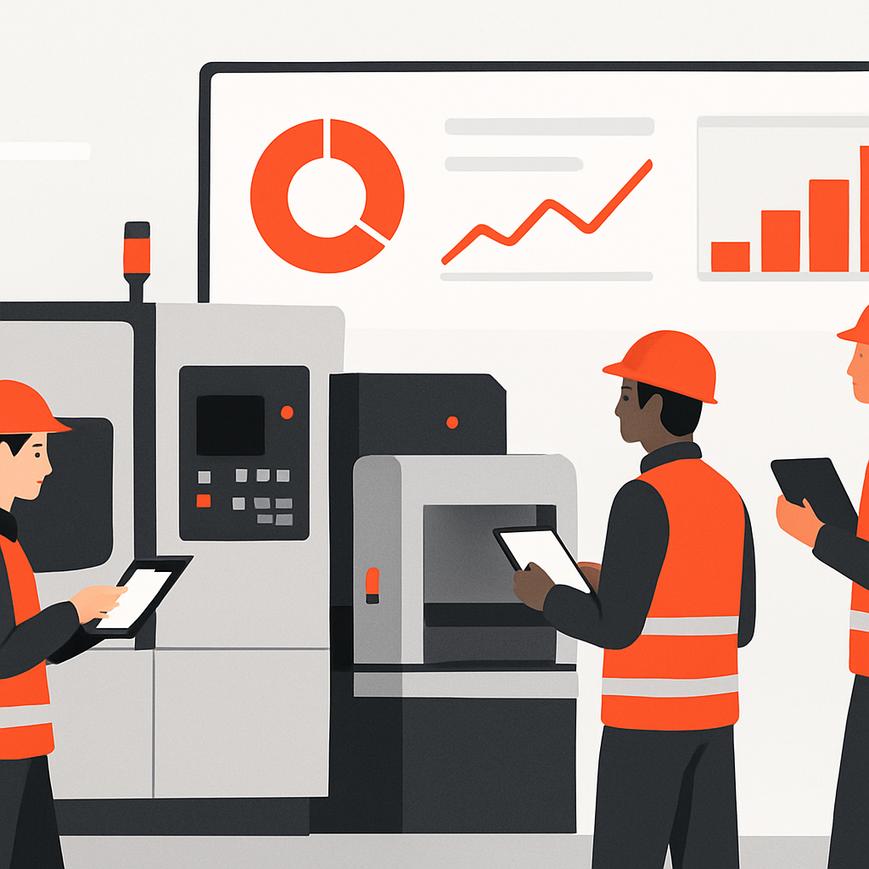
In an increasingly competitive industrial context, the impact of OEE, or overall equipment efficiency, has become a major issue for plants seeking to optimize their performance. OEE measures the proportion of production time that is truly productive, revealing losses due to stoppages, reduced speed or product quality. Without a thorough understanding of this indicator, industrial plants risk missing out on valuable opportunities for improvement, resulting in high costs and reduced efficiency.
The causes of low OEE often stem from a variety of sources, such as frequent breakdowns, machine recalibration, and inefficient procedures. These problems not only lead to increased downtime, but also directly affect the quality of finished products. As a result, production costs rise, and the plant’s competitiveness in the marketplace suffers. As quality expectations rise, failure to address these causes can jeopardize the company’s long-term viability.
To improve OEE, it is essential to rely on levers such as the digitalization of the shop floor and the adoption of continuous improvement methods such as Lean Manufacturing and Total Productive Maintenance. Measuring, analyzing and making data-driven decisions with solutions such as
A concrete example of the positive impact of OEE improvement can be found in an automotive manufacturing plant that succeeded in reducing its downtime by 30% by integrating a real-time tracking system. Thanks to the data collected by solutions like
In conclusion, for industrial decision-makers, starting a project focused on OEE improvement is essential to remain competitive. It is imperative to structure this approach by first measuring current performance, eliminating bottlenecks and resolutely entering into a continuous improvement process. With the support of TeepTrak solutions, performance visibility and analysis become accessible, facilitating production optimization and encouraging a culture of perpetual improvement.
FAQ
Question 1: How do you measure the impact of OEE in a plant?
Measuring the impact of OEE means tracking the availability, performance and quality of your equipment using real-time monitoring tools. Using a solution like TeepTrak, you can identify the strengths and weaknesses of your production line.
Question 2: What is the first step in improving OEE?
The first step in improving OEE is to collect accurate data on current equipment performance. This initial analysis enables us to target priority areas for applying continuous improvement and digitalization solutions.
Question 3: What can you expect to gain from a successful OEE project?
A project to improve OEE can lead to a significant reduction in downtime, improved product quality and increased productivity. These results translate into greater competitiveness and lower production costs.

0 Comments