
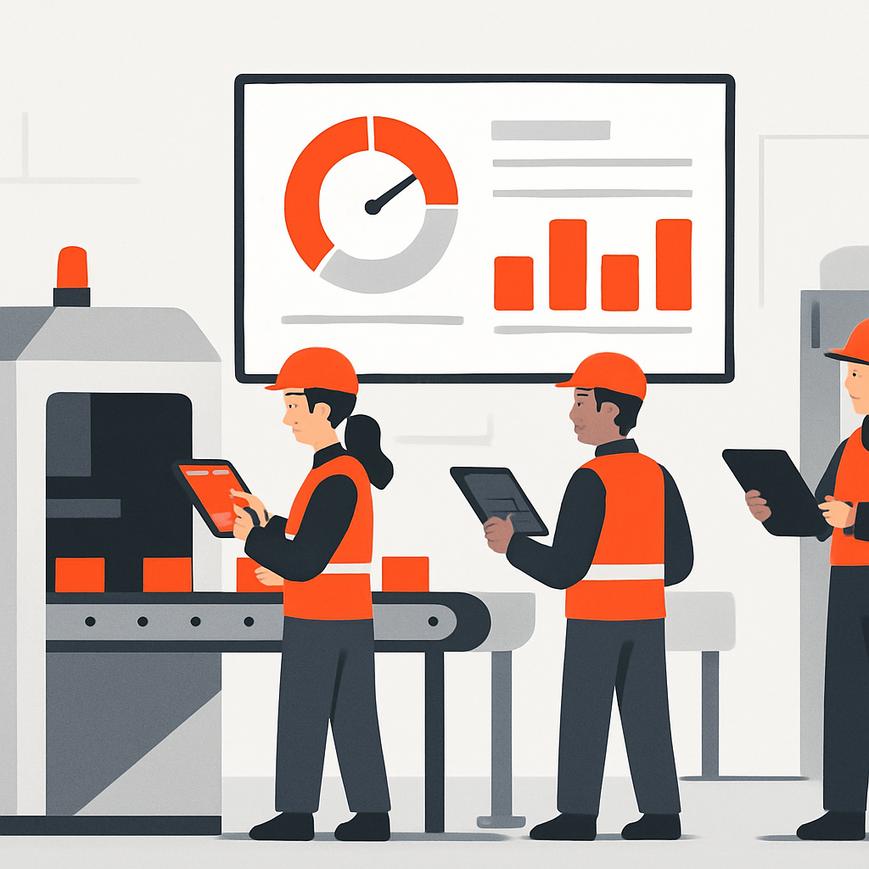
In a context of increasing competitiveness, the efficiency of assembly lines is critical for factories. Calculating
Underlying causes of reduced OEE include frequent and undocumented breakdowns, prolonged downtime between changeovers, and ineffective downtime management. These factors lead to yield losses and increase production costs. Without real-time monitoring of these factors, opportunities for improvement are lost, resulting in lower OEE (Overall Equipment Effectiveness) and a direct impact on profitability.
The levers for improving OEE involve the integration of solutions such as preventive maintenance, continuous improvement using Lean Manufacturing methods, and the digitization of the shop floor with advanced tools. For example,
In a plant producing automotive parts, for example, the use of OEE-based systems reduced unplanned downtime by 20%. By introducing systematic monitoring and training staff in the use of measurement tools, the site significantly improved its OEE. Customer case studies illustrate this type of success.
For plant managers, embarking on an OEE project is a strategic step towards improving competitiveness and productivity. Identifying bottlenecks and prioritizing corrective actions are crucial. By leveraging OEE Solution tools and real-time performance monitoring, a plant can direct its efforts towards better downtime management and continuous performance optimization.
FAQ
Question 1: What impact does OEE have on industrial performance?
OEE has a direct impact on industrial performance, providing a clear measure of production efficiency. Optimizing OEE can reduce costs, improve quality and increase equipment availability.
Question 2: How do you calculate the OEE for an assembly line?
Calculating OEE involves measuring three factors: availability, performance and quality. Each of these elements must be precisely evaluated to identify areas for improvement.
Question 3: What tools can help improve OEE?
Solutions like TeepTrak’s tools enable real-time monitoring and in-depth analysis of performance, making it easier to identify bottlenecks and achieve continuous optimization.

0 Comments