
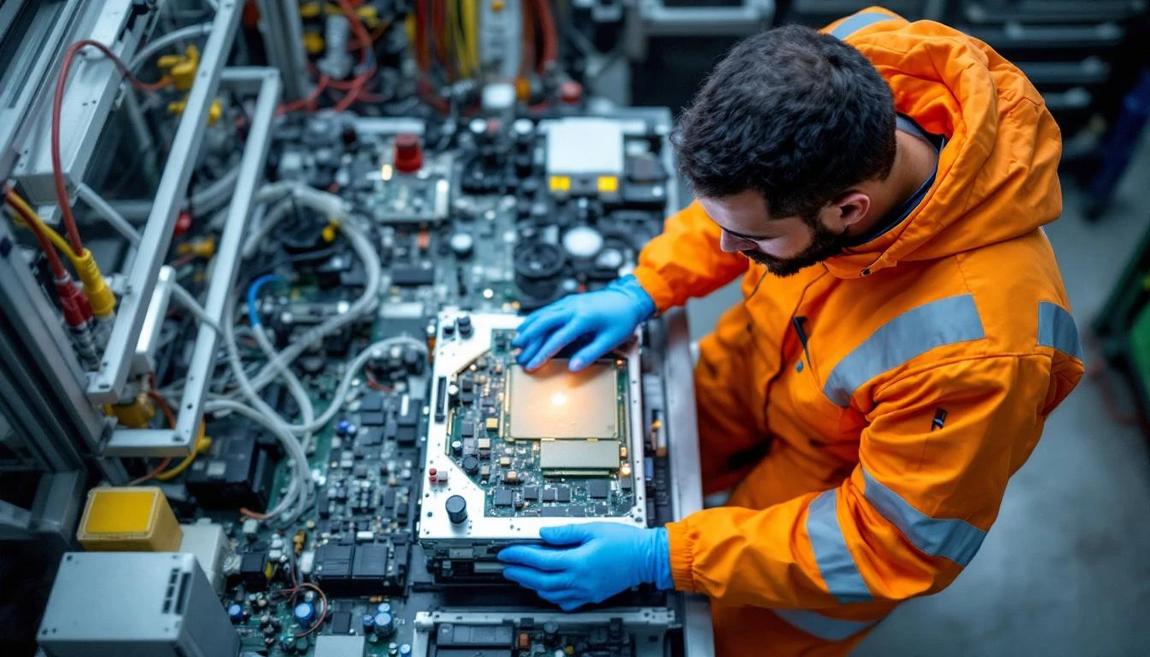
In today’s industrial landscape, the question of efficiency is paramount. A key concept in assessing this efficiency is OEE, or Overall Equipment Effectiveness. Assessing and improving OEE is essential for any plant wishing to optimize its production lines. But what does OEE really mean in the manufacturing sector? Understanding this concept is crucial to reducing downtime, cutting costs and boosting production quality.
There are many causes of low OEE. They can include unplanned downtime, slow configuration changes, inadequate maintenance or inefficient processes. These problems translate into lower productivity and higher costs, which affect a company’s competitiveness. Understanding and improving OEE enables industrial managers to detect these inefficiencies and react accordingly.
To overcome these challenges, several levers can be activated. Adopting a real-time OEE and performance monitoring solution like the one offered by TeepTrak makes it possible to analyze production data in real time. In addition, the digitization of the shop floor, via solutions such as those offered by TeepTrak, makes it possible to accurately monitor and proactively manage production line performance. Emphasis must also be placed on continuous improvement methods, such as Lean Manufacturing, to reduce waste.
A concrete example comes from an electronic component manufacturing plant which saw its OEE rise from 60% to 80% in six months after adopting TeepTrak. The solution provided increased visibility over production lines, identifying bottlenecks and optimizing changeover times. Unplanned stoppages were rapidly reduced thanks to proactive maintenance made possible by real-time monitoring, demonstrating how well-used tools can transform industrial performance.
For any organization wishing to improve its performance, it is essential to embark on a structured OEE approach. Starting by measuring current OEE, identifying key challenges, and deploying tools like those offered by TeepTrak, represents the first step towards continuous improvement. Ultimately, improving OEE translates not only into greater efficiency, but also into enhanced competitiveness and improved customer satisfaction. Taking action today can lead to substantial gains in the long term.
FAQ
Question 1: How do you measure OEE in a plant?
To measure OEE, it is necessary to track three main components: availability, performance and quality. These data can be collected manually or automatically, using sensors and digital solutions such as TeepTrak.
Question 2: What impact does a low OEE have on production?
A low OEE translates into numerous problems such as frequent downtime, inferior production quality and high production costs. This directly affects the company’s profitability and competitiveness in the marketplace.
Question 3: Where to start improving OEE?
OEE improvement begins with a precise diagnosis of current performance, using specialized tools. Next, it is essential to identify the main bottlenecks and implement continuous improvement strategies such as Lean Manufacturing.


0 Comments