
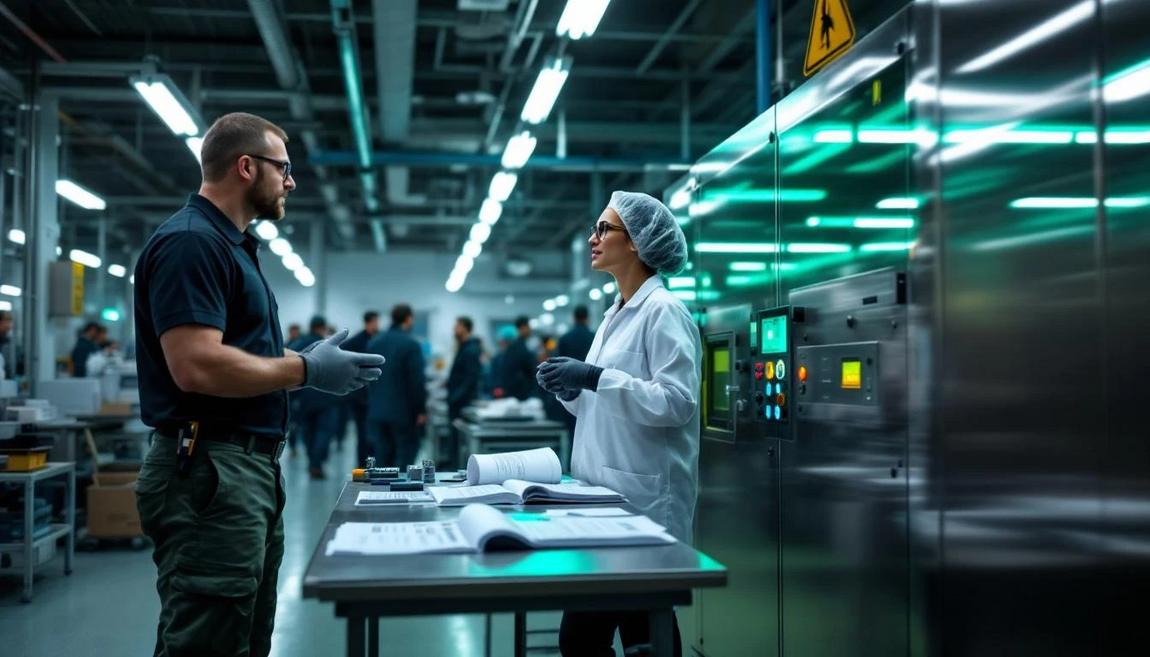
In today’s industrial context, where competition and the demand for profitability are more intense than ever, understanding and optimizing OEE (Overall Equipment Effectiveness) has become crucial for plants. As a key performance indicator, OEE measures the real productivity of a production line, taking into account availability, performance and quality. Poorly mastered, it can lead to ineffective performance monitoring, masking real problems and hampering continuous improvement initiatives.
Sub-optimal OEE is often due to a number of causes. Inadequate maintenance can lead to unforeseen downtime, while a lack of staff training leads to frequent errors, with a direct impact on quality. These factors, combined with non-standardized processes, add to production costs and adversely affect OEE, thus hampering plant competitiveness. Precise OEE analysis helps to identify these bottlenecks and facilitates production line optimization.
Several levers can be used to remedy these problems. The adoption of continuous improvement methods such as
A concrete example of a successful application is that of an automotive plant faced with productivity losses due to frequent breakdowns. Using a real-time tracking solution from TeepTrak, the plant was able to precisely identify faulty equipment and optimize its maintenance. The results were immediate: a noticeable improvement in OEE, a significant reduction in downtime and an increase in customer satisfaction.
In conclusion, to maximize the return on investment of your production lines, it is imperative to control and optimize your OEE. Starting with an accurate assessment of your current situation, using a suitable tool such as those offered by TeepTrak, will be the first step towards improved performance. Launching a TRS/OEE project with a methodical, structured approach will enable you to capitalize on the data collected to boost your competitiveness.
FAQ
Question 1: How does OEE impact your plant’s performance?
OEE measures the efficiency of your equipment, integrating availability, performance and quality. A high OEE indicates a good level of productivity, reducing costs and increasing competitiveness.
Question 2: What is the first step in improving OEE?
The first step in improving OEE is to accurately analyze your current data to identify the main bottlenecks, then deploy suitable tools like those from TeepTrak for real-time steering.
Question 3: What benefits can I expect from an OEE continuous improvement project?
A well-managed project can significantly reduce downtime, improve product quality, optimize costs and increase customer satisfaction, thus boosting industrial competitiveness.
0 Comments