
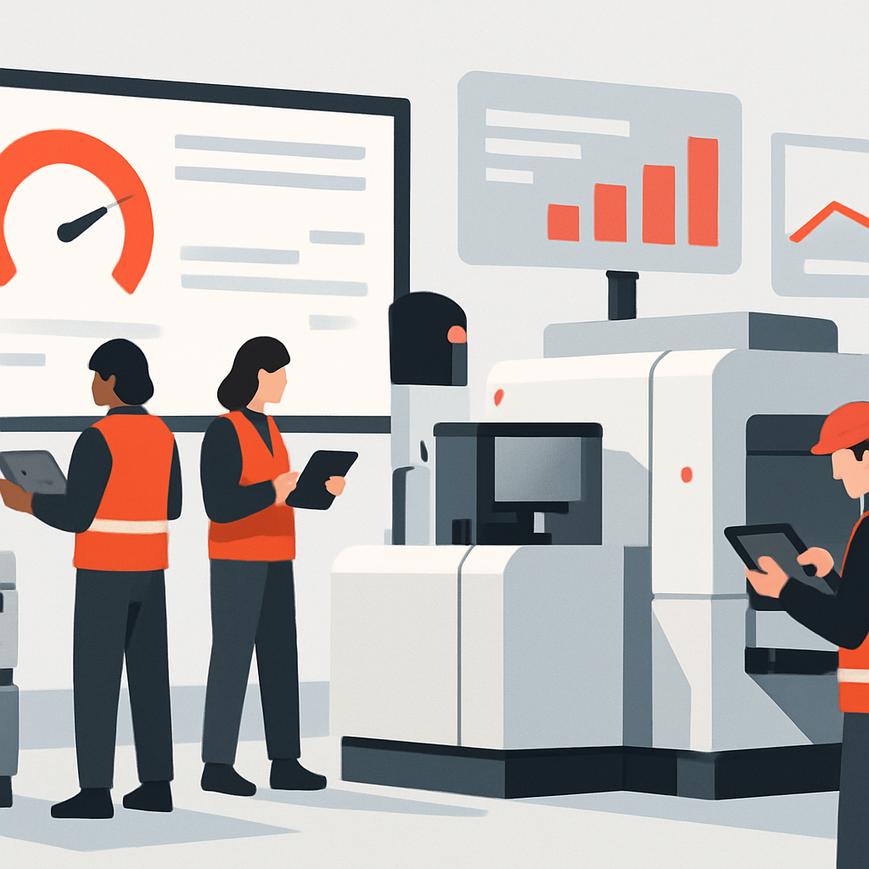
Achieving an OEE score of 85% is often considered a world-class standard in the manufacturing industry. However, achieving this goal remains a challenge for many plants, where inefficiencies and production problems obscure the true potential of production lines. In a world of tightening margins and rising quality demands, understanding and optimizing Overall Equipment Effectiveness (OEE) is critical to competitiveness.
The causes of poor OEE performance are often multiple. Frequent machine stoppages, loss of speed or quality failures have a direct impact on the overall efficiency ratio (OEE). Each interruption not only generates additional costs, but also lowers team morale. What’s more, poor visibility of production data can lead to sub-optimal decisions. Compromising the plant’s ability to achieve a score of 85%.
To improve OEE, a range of strategies and tools are required. The adoption of shop-floor
Consider the example of an electronics manufacturing plant which, by adopting TeepTrak solutions, identified unplanned downtime as the main obstacle to world-class OEE. Within 6 months, via a structured preventive maintenance program and the digitization of performance monitoring, the plant not only achieved an average OEE of 85%, but also saw a 20% reduction in maintenance costs. Understanding and calculating OEE was pivotal in this process.
It’s time for industrial decision-makers to take concrete steps to monitor and improve their OEE. By starting with team training on the importance of OEE, then investing in tools such as those offered by TeepTrak, every plant can transform its performance by aligning itself with global standards. A well-structured OEE project can deliver sustainable gains in productivity and competitiveness.
FAQ
Question 1: How do you achieve an OEE of 85%?
To achieve an OEE of 85%, it is crucial to target the main causes of losses, such as unplanned stoppages, and resolve them using technological solutions like those offered by TeepTrak.
Question 2: What is the impact of a low OEE on production?
Low OEE means lower productivity, higher production costs and reduced competitiveness. These impacts have a lasting effect on plant profitability.
Question 3: Where to start improving OEE?
Start by measuring your current OEE, identify the main obstacles, and implement solutions like real-time performance monitoring with TeepTrak to track your improvements.



0 Comments