
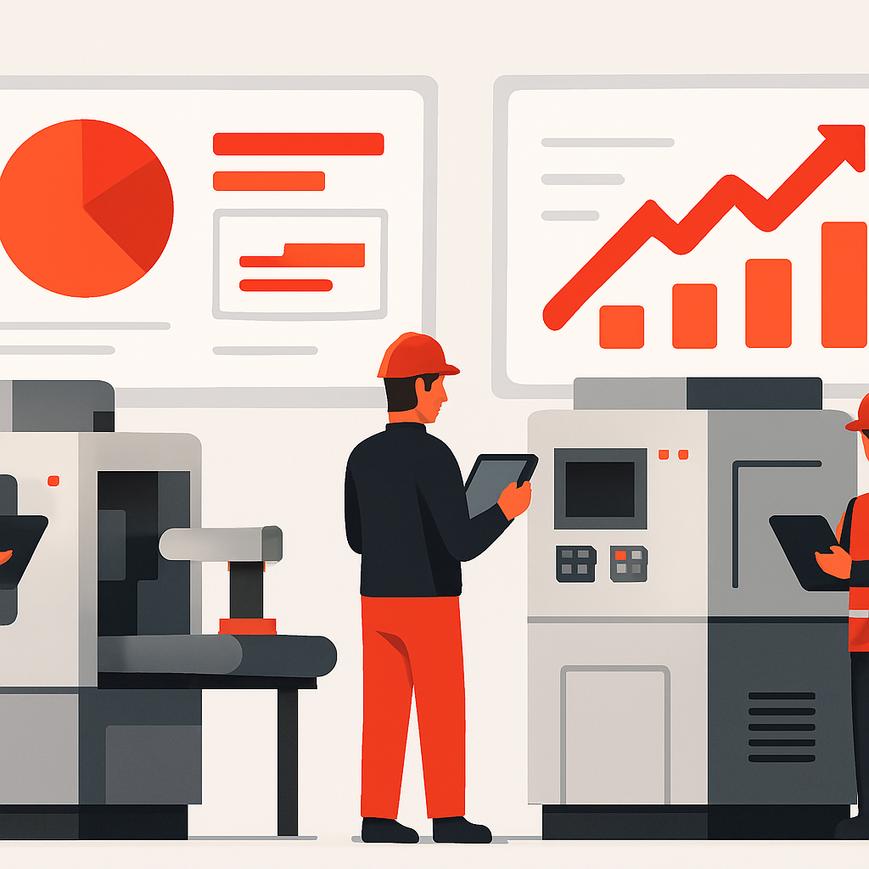
In today’s industrial context, the effective understanding and application of the term OEE (Overall Equipment Effectiveness) is of crucial importance for plants seeking to improve their competitiveness. By discovering the
Analyzing the causes of OEE underperformance often reveals factors such as unplanned downtime, production speeds below theoretical capacity, and questionable quality rates. These factors not only undermine productivity, but also significantly increase unit costs and hamper continuous improvement. A low OEE rate can result in inefficient use of resources and reduced competitiveness in the marketplace.
To overcome these challenges, factories need powerful levers such as shop-floor digitalization, with solutions like those offered by TeepTrak. Real-time monitoring via clear indicators enables bottlenecks to be quickly identified. Adopting continuous improvement methods and optimizing communication between teams also helps to close the performance gap. Reliable data is also crucial for conducting effective predictive analyses and guiding strategic decisions.
A case in point is an automotive parts manufacturing plant in India. At the beginning of the year, the plant had an OEE of just over 60%. In collaboration with TeepTrak, it implemented a real-time TRS tracking system. Improvements were quickly seen thanks to better visibility across all production lines, enabling specific actions to be targeted, such as reducing downtime and improving maintenance processes. This illustrates how understanding and acting on OEE transforms industrial performance.
For a plant manager, taking action on OEE optimization should be a priority. Not only will it increase productivity, it will also provide a significant competitive advantage. Plants need to start by effectively measuring their OEE, identifying areas for improvement, and integrating tools like TeepTrak’s to effectively drive continuous improvement. Now is the time to start a structured TRS/OEE project.
FAQ
Question 1: How can OEE improve my plant’s performance?
OEE provides a clear picture of your equipment’s inefficiencies. By improving it, you can increase overall efficiency, reduce costs and optimize production.
Question 2: What are the steps involved in starting up an OEE project?
Start with the current TRS/OEE measurement, identify critical areas, then implement tailored solutions, such as those from TeepTrak, for continuous monitoring and improvement.
Question 3: Why is understanding OEE in Hindi crucial for the Indian market?
Understanding OEE in a local context enables production practices to be better aligned with cultural and linguistic realities, improving commitment and results.


0 Comments